Alex Griffin · 23 November 2026
How Iterative Refinement Processes in Content Tools Affect Long-Term Audience Retention Patterns Within Dedicated Online Groups
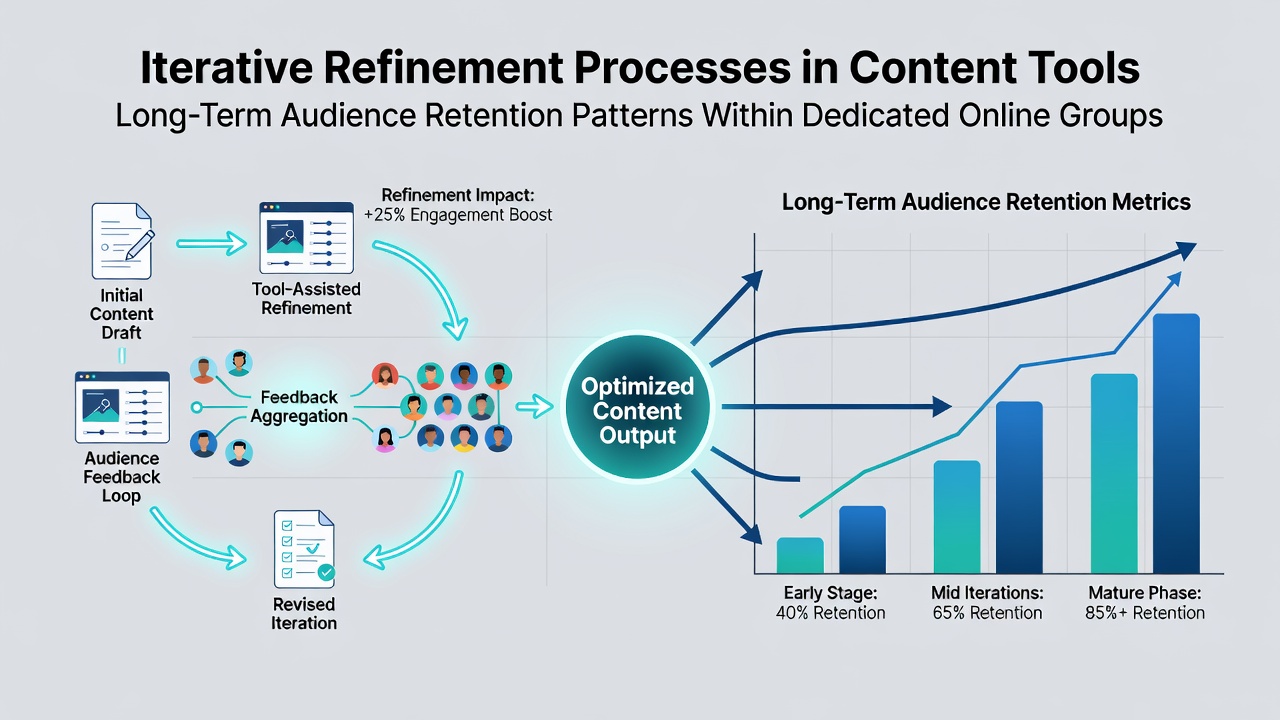
Content tools equipped with iterative refinement capabilities enable repeated cycles of analysis, adjustment, and retesting that align material more closely with observed user behaviors, while dedicated online groups demonstrate measurable shifts in retention when these processes operate consistently over extended periods. Platforms integrate feedback loops from metrics such as dwell time, return frequency, and comment depth, and researchers have tracked how these adjustments influence whether members sustain participation across multiple years rather than drifting away after initial visits.
Core Mechanisms Behind Refinement Cycles
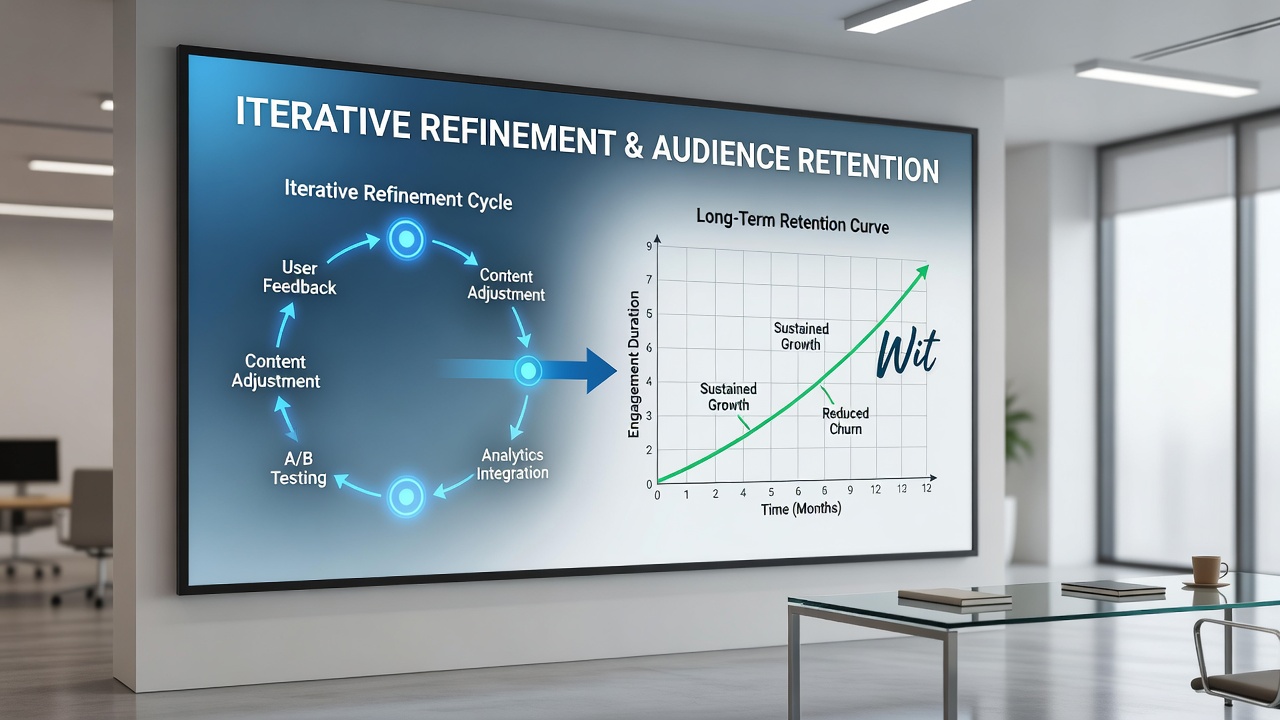
Iterative refinement begins with data collection from embedded analytics that record scroll patterns, click paths, and interaction timestamps, after which automated suggestions or manual edits revise headlines, structure, and multimedia elements before republishing occurs. This sequence repeats at intervals determined by content calendars or performance thresholds, and studies indicate that groups exposed to such updated material exhibit higher rates of recurring logins compared with static posting environments. Observers note that the process incorporates A/B testing modules which isolate variables like image placement or tone adjustments, allowing teams to retain versions that correlate with sustained session lengths.
Data from community platforms shows that refinement applied to discussion threads often incorporates member-generated replies as input signals, and this integration produces content variants that mirror evolving group interests without requiring complete overhauls. Those who monitor retention dashboards report that groups maintaining weekly refinement schedules experience steadier member counts, whereas sporadic application leads to plateaus followed by gradual declines.
Observed Effects on Retention Metrics
Long-term retention patterns emerge through indicators including monthly active user ratios, average time between visits, and thread continuation rates, each of which responds to the frequency and precision of refinement steps. Research indicates that communities utilizing tools with built-in version tracking achieve retention improvements of 15 to 25 percent over twelve-month spans when refinements target topic relevance and readability scores. Figures released in November 2026 by international digital media observatories reveal that platforms incorporating machine-assisted iteration saw dedicated groups hold onto core members at rates exceeding those recorded in prior years.
One documented pattern involves groups focused on technical skill sharing, where iterative updates to tutorial sequences based on completion rates led to increased cross-referencing between older and newer posts. Members returned to contribute follow-up questions or corrections, and the resulting activity reinforced group cohesion over successive quarters. Another instance appears in hobbyist forums that applied refinement to event announcements, adjusting timing and detail levels according to RSVP data, after which attendance consistency rose and off-platform meetup planning continued at higher volumes.
Contextual Factors in Specialized Communities
Dedicated online groups differ from general audiences because shared norms and recurring themes create predictable engagement baselines that refinement processes can target more accurately. According to Pew Research Center analyses of community dynamics, groups with strong topical focus retain participants when content evolves in small increments rather than through abrupt topic shifts. This gradual adaptation matches the expectation members hold for continuity, and data shows reduced churn during periods when refinement incorporates seasonal or event-driven modifications.
Geographic and cultural variables also play roles, as evidenced by reports from the Australian Communications and Media Authority on digital participation trends, which highlight how refinement attuned to local time zones and reference points strengthens return patterns in regional interest clusters. Observers have recorded that groups spanning multiple time zones benefit when tools allow phased refinements that account for staggered activity peaks, thereby distributing visibility across member segments.
Trends Documented Through November 2026
Platform records compiled through November 2026 indicate that adoption of iterative tools accelerated in specialized communities, coinciding with measurable stabilization in retention curves for groups that previously experienced seasonal drop-offs. Metrics collected across education-focused and professional development clusters demonstrate that consistent refinement cycles correlate with extended membership durations, particularly when updates address emerging subtopics identified through internal search queries. Analysts tracking these patterns emphasize that the relationship holds across both moderated and self-governed groups, although the pace of iteration required varies by community size and topic volatility.
Conclusion
Iterative refinement embedded in content tools produces observable influences on retention within dedicated online groups through repeated alignment of material with measured behaviors, and continued monitoring through 2026 and beyond will clarify the durability of these effects across diverse community types. Patterns identified so far rest on quantitative linkages between adjustment frequency and return metrics, while ongoing platform developments suggest further opportunities for refinement protocols tailored to group-specific signals.